Article
What Is Commercial Housekeeping Services?
What is commercial housekeeping services? Learn what it includes, how it works, and why businesses use it to keep sites clean, safe and presentable.
A clean workplace does more than look good when a client walks through the door. It affects hygiene, staff morale, safety, and how well your property holds up over time. If you have been asking what is commercial housekeeping services, the short answer is this: it is the organised, ongoing cleaning and care of commercial premises to keep them clean, safe, orderly, and ready for daily use.
That sounds simple enough, but the real value is in the detail. Commercial housekeeping is not just someone emptying bins and running a mop across the floor. Done properly, it is a planned service built around your site, your hours, your foot traffic, and the standards your business needs to maintain.
What is commercial housekeeping services in practice?
Commercial housekeeping services refer to routine cleaning and presentation work carried out in business, industrial, and shared-use environments. The aim is to maintain a consistently clean premises, reduce health and safety risks, and support a professional environment for staff, customers, tenants, and visitors.
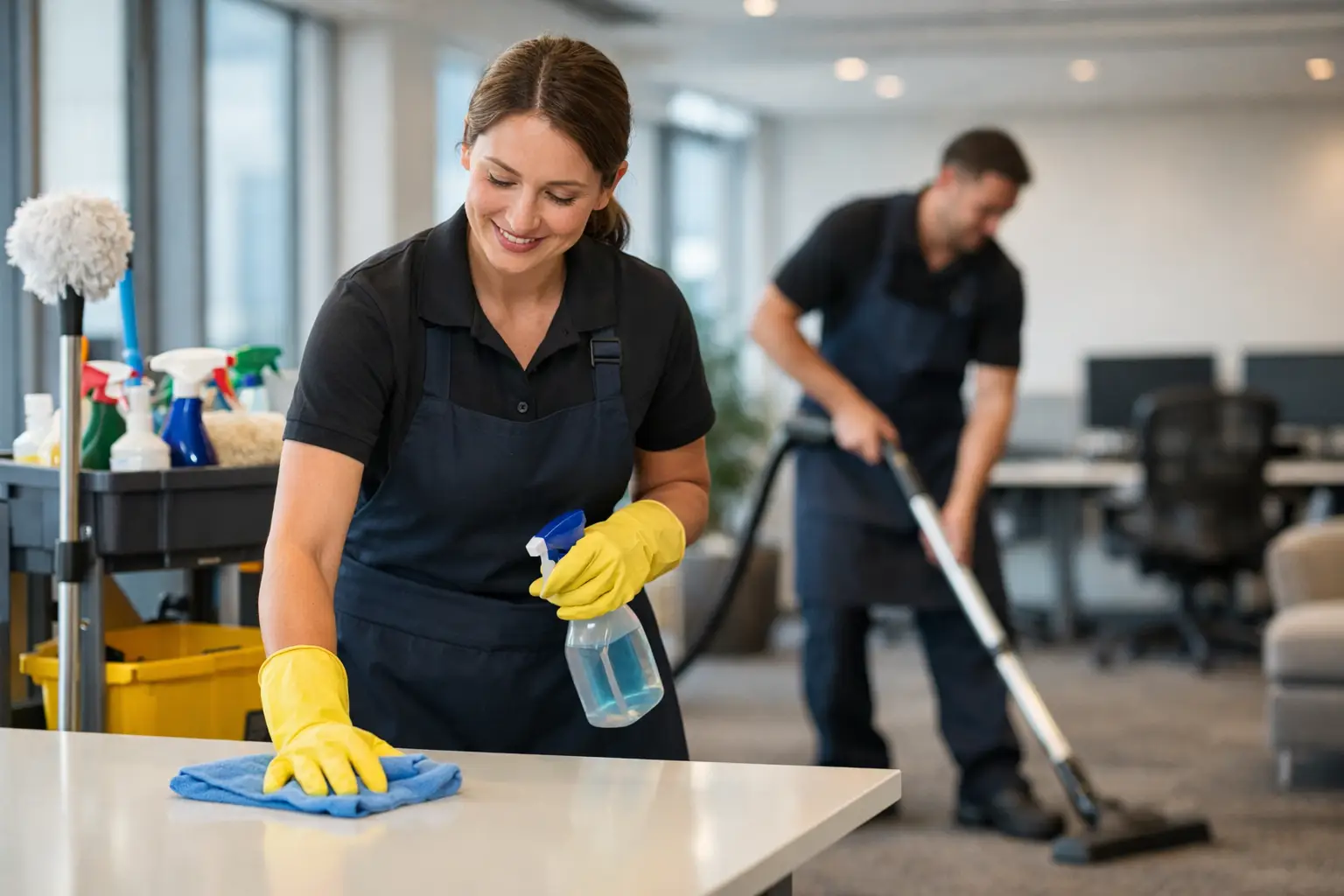
In practice, that can include cleaning reception areas, workstations, kitchens, amenities, floors, touchpoints, glass, and common areas. In some settings it also extends to stockrooms, stairwells, lifts, end-of-day tidying, rubbish removal, consumable checks, and periodic deeper cleaning.
The exact scope depends on the property. An office suite has very different housekeeping needs from a medical clinic, childcare centre, retail shop, strata complex, or construction handover site. That is why quality providers work from a customised plan rather than a one-size-fits-all checklist.
More than basic cleaning
One of the most common misunderstandings is that commercial housekeeping and general cleaning are exactly the same. They overlap, but housekeeping usually involves a more structured, ongoing approach to cleanliness, order, and upkeep.
General cleaning can be a once-off or occasional service. Commercial housekeeping is more often scheduled daily, several times a week, or weekly, depending on site usage. It is designed to maintain standards continuously rather than fix issues only after they become obvious.
There is also a presentation element. In many businesses, cleanliness is part of the customer experience. Smudged glass, poorly maintained bathrooms, dusty skirting, or overflowing rubbish bins send a message, and it is rarely the one you want attached to your brand.
What is usually included?
Most commercial housekeeping services cover the core day-to-day cleaning tasks needed to keep a premises functioning well. That commonly includes vacuuming and mopping floors, wiping desks and surfaces, sanitising bathrooms, cleaning kitchens or staff break areas, emptying rubbish bins, and spot-cleaning marks on glass or walls.
Depending on the site, the service may also include internal window and frame cleaning, detailed attention to high-touch points, restocking consumables supplied by the client, and periodic intensive work such as carpet cleaning, tile and grout cleaning, or hard floor care.
This is where businesses often benefit from using a provider with broader capability. Routine housekeeping keeps the property under control, but specialist work such as strip and seal, upholstery cleaning, builder clean-ups, pressure cleaning, or flood response may still be needed at certain points. Having one reliable team manage both the ongoing maintenance and the specialist side can make scheduling and quality control much easier.
Why businesses invest in commercial housekeeping
For most business owners and facility managers, the decision comes down to standards, time, and risk. Your team is there to do their job, not manage cleaning gaps, chase supplies, or deal with hygiene complaints.
A properly maintained site helps reduce the build-up of dirt, bacteria, odours, stains, and wear. It also supports a safer working environment. Slippery floors, neglected wet areas, dusty vents, and cluttered common spaces can all create avoidable issues if they are left unchecked.
There is also the asset protection side. Carpets last longer when they are regularly maintained. Hard floors keep their finish for longer when dirt and grit are not grinding them down every day. Bathrooms and kitchens stay in better condition when soap scum, moisture, and grime are managed before they become established problems.
For customer-facing sites, the value is immediate. People notice clean spaces quickly, and they notice neglected ones even faster. Whether you operate an office, showroom, retail store, accommodation site, or mixed-use property, presentation has a direct effect on confidence and perception.
Where commercial housekeeping services are used
Commercial housekeeping is relevant across a wide range of industries. Offices are the most obvious example, but they are far from the only one. Retail stores, body corporate properties, medical and allied health spaces, schools, hospitality venues, warehouses, gyms, and display suites all rely on regular cleaning and upkeep.
Some environments need a lighter-touch service focused on tidiness and amenities. Others need a more rigorous program with high-frequency bathroom sanitation, detailed floor maintenance, and strict attention to touchpoints. A busy site with heavy foot traffic will usually need more than a small premises with limited public access.
That is why service frequency should always reflect how the property is actually used. Over-servicing wastes budget. Under-servicing usually shows up fast.
What to expect from a professional provider
A professional commercial housekeeping provider should do more than send a cleaner and hope for the best. You should expect a clear scope of works, scheduled attendance, reliable communication, and a service plan matched to your premises.
Licensed and fully insured operators provide an extra layer of confidence, particularly for businesses that need dependable access management, after-hours attendance, or work in environments with compliance and safety expectations. Experience matters too. Different surfaces, finishes, and property types need the right methods and products.
The better providers also pay attention to the chemistry side of cleaning. Eco-friendly and safe products are not just a selling point. In many workplaces they are a practical choice for reducing harsh residues, supporting indoor air quality, and maintaining a healthier environment for staff and visitors.
Consistency is another factor that should not be underestimated. A quote may look competitive on paper, but if standards vary week to week, the cheaper option often becomes the more expensive one. Rework, complaints, and preventable damage all carry a cost.
The difference between housekeeping and specialist cleaning
This is where many businesses need a bit of clarity. Commercial housekeeping handles the routine care of the premises. Specialist cleaning deals with tasks that require different equipment, training, or processes.
For example, your regular housekeeping team may keep carpets clean through vacuuming and spot treatment, but periodic deep carpet cleaning is a separate service. The same applies to strip and seal floor restoration, pressure cleaning, post-construction cleaning, window and frame detailing, or emergency flood restoration.
A capable provider should be able to advise when routine housekeeping is enough and when a specialist service is the smarter option. It depends on the age of the surfaces, the level of soiling, the type of property, and the standard you need to achieve.
How to choose the right service level
Not every business needs daily housekeeping, and not every premises can get by with a weekly visit. The right schedule depends on foot traffic, the type of work performed on site, public access, and how quickly mess accumulates.
If you run an office with moderate traffic, a few services each week may be enough to maintain bathrooms, kitchens, floors, and work areas. If you manage a medical setting, accommodation site, or busy retail premises, daily attention may be more appropriate. For builders and property managers, housekeeping may also need to sit alongside one-off cleans tied to handover dates, tenant changes, or site incidents.
The best approach is to assess the areas that matter most, the problems that recur, and the result you want. From there, a customised schedule can be built around your budget and operational hours.
Why tailored plans matter
No two sites collect dust, moisture, traffic marks, and rubbish in quite the same way. A good housekeeping plan accounts for the layout of the property, peak usage times, access requirements, sensitive areas, and any specialist surfaces that need particular care.
That tailored approach is one reason many Queensland businesses choose providers like Top Clean Specialist. When a company can handle regular commercial housekeeping as well as specialist floor care, carpet cleaning, builder cleaning, window cleaning, and emergency response, clients get continuity and less operational friction.
If you were wondering what is commercial housekeeping services, the practical answer is this: it is the routine care that keeps your business clean today and in better condition tomorrow. The right service should feel dependable, well-managed, and suited to the way your property actually runs. When that happens, cleaning stops being a distraction and starts doing what it should - protecting your presentation, your people, and your premises.
Need help with cleaning?
Contact Top Clean Specialist for a free quote — or call 0411 880 445.
Get a Free Quote