Article
Flood Restoration Case Study: Brisbane Office Recovery
This flood restoration case study shows how rapid extraction, drying and verification helped protect a Brisbane office after water damage with confidence.
At 6:15 am on a wet Brisbane morning, an office manager arrived to find water spreading across the reception area, meeting room and adjoining carpeted workspaces. A failed flexi hose beneath the kitchenette sink had leaked overnight. The immediate concern was obvious - standing water, saturated carpet and an interrupted workday. The less visible risk was moisture travelling beneath finishes, affecting skirting boards and creating conditions where mould could develop.
This flood restoration case study follows a representative commercial water-damage response and shows why prompt, methodical action matters. For business operators, the goal is not simply to remove visible water. It is to protect the building, preserve recoverable materials and return staff to a clean, safe and usable workplace with as little disruption as practical.
The incident: a small leak with a wide impact
The source of water was isolated before the restoration team arrived, but approximately nine hours had passed since the leak began. Water had moved from the kitchenette through the reception carpet, underneath workstation areas and into a meeting room. While the affected area measured roughly 85 square metres, the response could not be based on floor area alone.
Carpet construction, underlay, subfloor type, wall finishes, furniture legs and the age of the building all influence the restoration plan. In this case, the office had commercial carpet tiles over a concrete slab, painted plasterboard walls and fixed joinery close to the kitchenette. Several computer cables and power boards were also located near the wet edge of the work area.
The manager had acted sensibly by keeping staff out of the affected zone and avoiding the use of electrical equipment near the water. They had also placed towels around the kitchenette, but had not attempted to lift carpet tiles or run household fans. That restraint helped. Improvised drying can sometimes push moisture further into wall cavities or create a false sense that the area is dry when the backing, underlay or subfloor still holds water.
Flood restoration case study: the first-hour priorities
A professional flood response begins with assessment, not assumptions. On arrival, the technician confirmed that the water source was stopped, identified the affected materials and checked for electrical safety concerns. Moisture readings were taken across the visible wet area and beyond it, including wall bases, joinery edges and adjoining carpet tiles.
The water was clean at the point of escape, which gave the team a better opportunity to restore rather than replace materials. However, clean water does not stay clean indefinitely. Once water has sat in carpet, contacted dust and travelled through building materials, hygiene risks increase. Time therefore remained a critical factor.
The first operational priorities were to remove standing water, protect unaffected office areas and document the condition of the property. Clear documentation supports the property owner, tenant and insurer, particularly where there may be a claim or a need to demonstrate that appropriate mitigation work was completed.
In a commercial setting, the team also needs to consider continuity. The client needed access to key files and a functional reception area by the following day. Rather than treating the office as one large work zone, the restoration plan separated the affected areas into stages. This allowed dry workspaces to remain available while recovery work continued in the wet sections.
Extraction and controlled drying
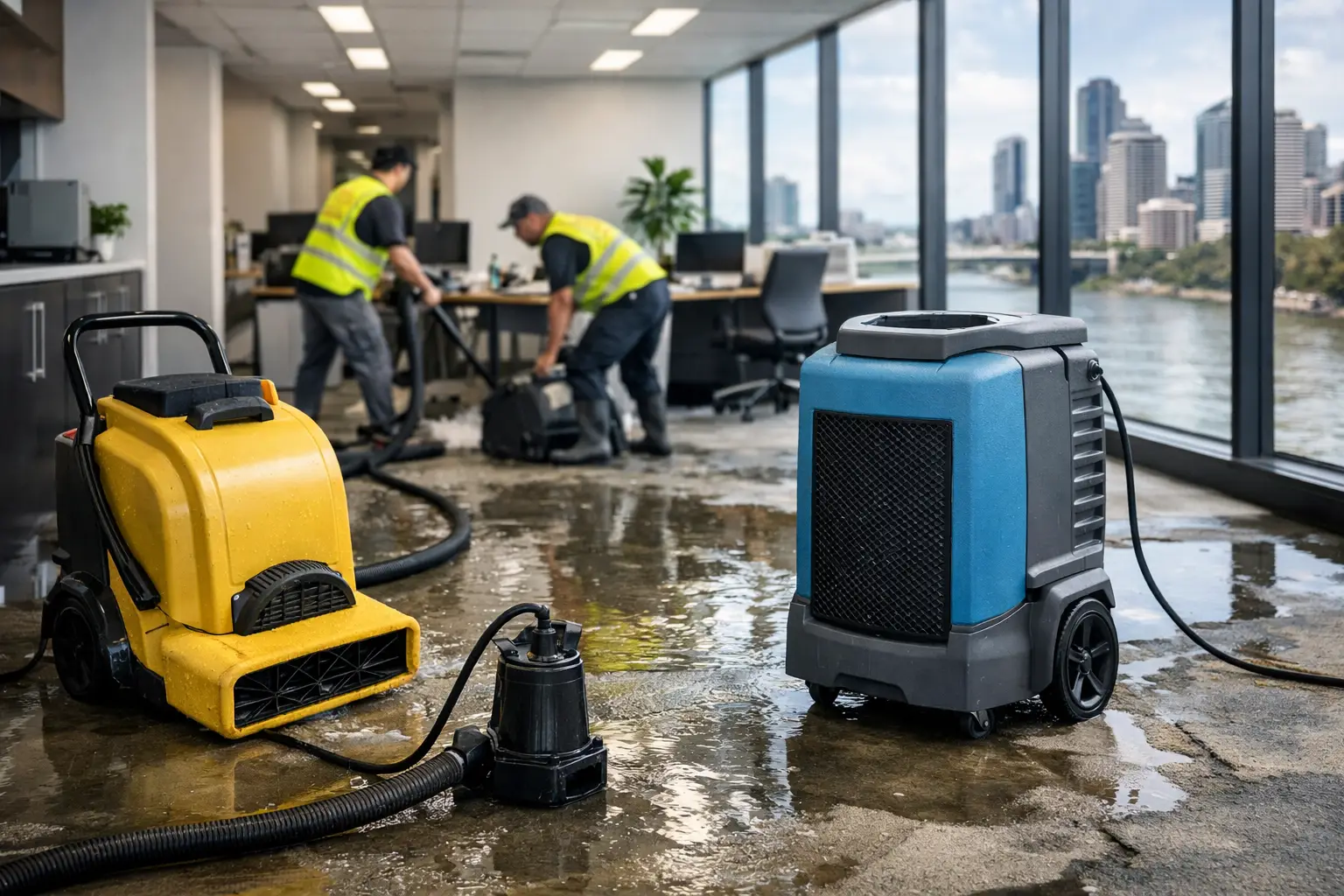
The team used commercial extraction equipment to remove water from carpet tiles and accessible floor areas. Extraction is one of the most valuable parts of the process because every litre removed directly is moisture that does not need to be evaporated later. It reduces drying time and can limit damage to carpet backing, adhesive and surrounding finishes.
Carpet tiles were selectively lifted in the most affected sections so the concrete slab beneath could be assessed and dried. Not every tile required removal. Where readings showed minimal moisture and the tiles were securely bonded, a controlled drying approach was used instead. This is a practical example of why flood restoration is not a one-size-fits-all service. Removing every finish can increase cost and disruption, while leaving saturated materials in place can risk delayed damage.
Air movers and commercial dehumidifiers were positioned to create consistent airflow and lower humidity. Equipment placement was adjusted around workstations, walls and doorways rather than simply lining machines along the room. The aim was to dry materials evenly while keeping walkways as clear and safe as possible.
The office manager was advised that drying equipment would create some background noise and produce warmth. That is a normal trade-off in active restoration. In many cases, accepting short-term inconvenience is preferable to closing a workplace for longer or replacing materials that could have been saved through early intervention.
What the moisture readings revealed
Visible water can be misleading. By the end of the first extraction stage, the carpet surface looked significantly better, but moisture measurements showed elevated readings beneath several tiles and at the base of the kitchenette wall. This is where professional monitoring changes the outcome.
One section of plasterboard near the leak had absorbed water beyond an acceptable level. It was not appropriate to rely on surface drying alone. The affected lower section was carefully identified for further repair assessment, preventing moisture from being sealed behind finishes. The fixed joinery itself remained structurally sound, although its toe-kick area required targeted drying.
The concrete slab held moisture longer than the carpet tiles, as expected. Drying equipment remained in place overnight, with the office divided into a protected restoration zone and a usable work zone. Staff were able to access unaffected desks and the business avoided a full closure.
This stage is often where rushed jobs fall short. Removing water is not the same as restoring a property. Drying must be measured against known dry standards for the material and environment, not judged by touch or appearance alone.
Verification before return to normal use
Over the following two days, the affected materials were checked at regular intervals. The restoration team monitored moisture levels, room temperature and relative humidity, then adjusted equipment as readings improved. Carpet tiles that had been lifted were cleaned, dried and reinstalled only once the slab and tile backing met the required drying target.
After the drying phase, the affected carpeted areas received professional cleaning to remove residual soil and support a fresh, presentable finish. Skirting boards and hard surfaces were cleaned, and the client received records of the work completed, including moisture findings, equipment use and final verification results.
The outcome was positive: the office reopened its reception and meeting room on schedule, most carpet tiles were retained, and the business avoided a more extensive strip-out. The section of wall that required repair was isolated early, allowing the property manager to arrange a controlled repair rather than deal with a larger mould or deterioration issue later.
Lessons for Queensland property owners and managers
Water damage can escalate quickly in Queensland's humid conditions, especially when a leak happens overnight, over a weekend or during a storm event. The difference between a manageable restoration and a costly replacement job often comes down to the first response and the quality of the assessment that follows.
If water enters a workplace or home, stop the source if it is safe to do so, keep people away from electrical hazards and move valuable items from the wet area where possible. Avoid using standard household vacuums on water, and do not assume the property is dry because puddles have disappeared. Materials can retain moisture out of sight.
A licenced, fully insured restoration provider can assess the affected materials, carry out extraction and drying, and provide a clear plan based on the actual condition of the property. For landlords and facility managers, this approach also creates a more reliable record of the incident and the steps taken to protect the asset.
At Top Clean Specialist, emergency flood restoration is approached with the same attention to detail applied across every specialist cleaning service: assess carefully, act promptly and verify the finished result. When water damage occurs, a calm and measured response gives your property the best chance of a clean, safe recovery.
Need help with cleaning?
Contact Top Clean Specialist for a free quote — or call 0411 880 445.
Get a Free Quote